
Professional Kitchen Knives

Forged for the Kitchen.
Built to Last.

包丁  ·  職人  ·  精度

Blade  ·  Craftsman  ·  Precision

Professional kitchen knives, made for cooks who demand precision at every cut.

View the Collection

The Collection

Three Blades.
One Standard.

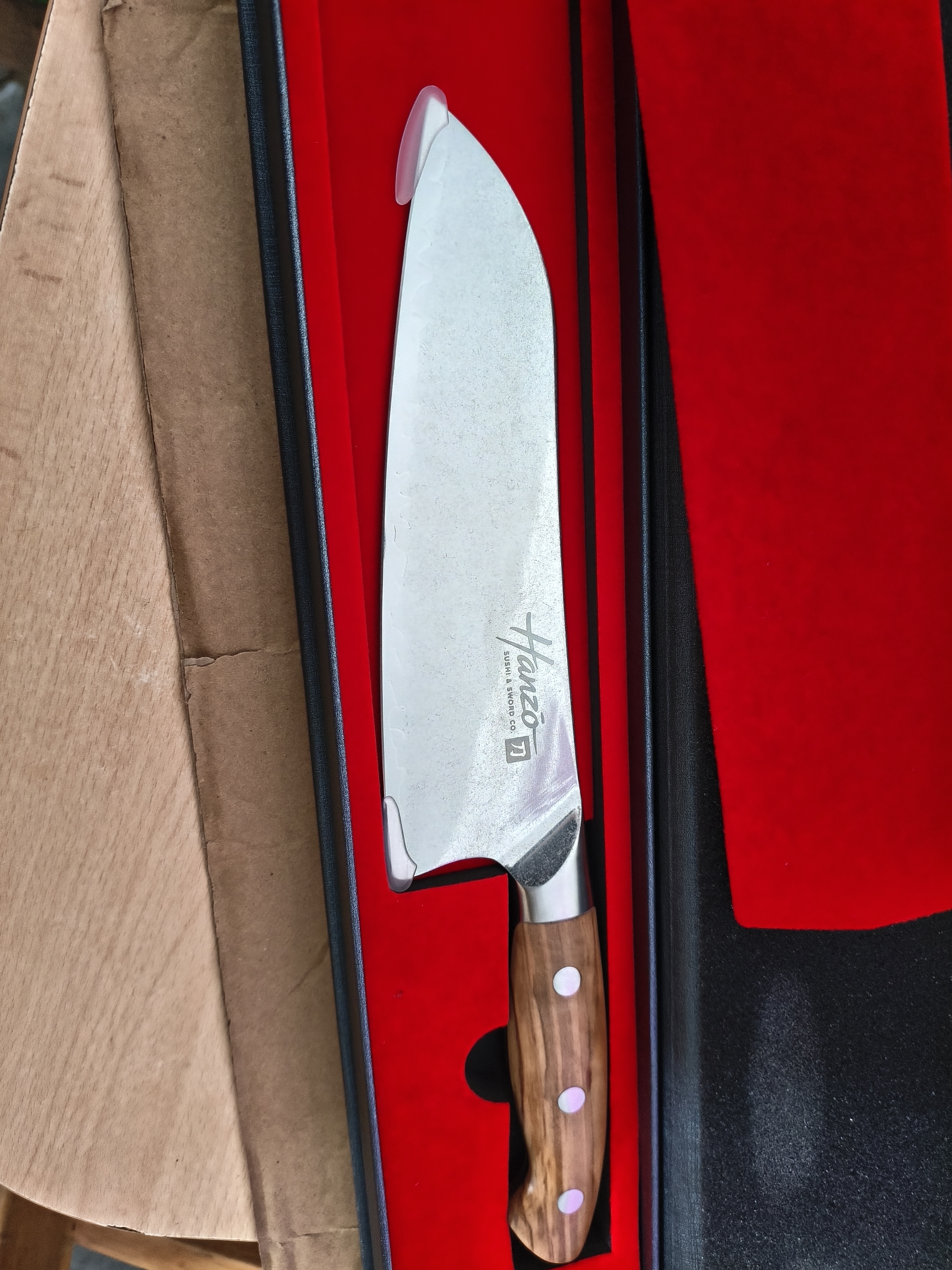
Each Hanzō knife is crafted from high-carbon stainless steel, finished to a mirror edge, and balanced for hours of work without fatigue. Built for professional kitchens, priced for the serious home cook.

Hanzō Santoku

Santoku

三徳 · Three Virtues

The everyday workhorse. Equally at home slicing fish, dicing vegetables, or breaking down boneless meat. Balanced for speed and control through hours of prep work.

Blade7 inch
SteelHigh-Carbon
HandleHardwood
Coming Soon on Amazon
Hanzō Kiritsuke

Kiritsuke

切付 · The Executive Blade

Traditionally reserved for head chefs. The angled tip allows for precise scoring and slicing while the long flat edge handles push-cuts through vegetables with authority. The hand-hammered blade finish reduces drag and food adhesion, and looks like nothing else on the block.

Blade8.5 inch
SteelHigh-Carbon
HandleHardwood
Coming Soon on Amazon
Hanzō Chef Knife

Chef

シェフナイフ · The All-Rounder

The Western blade reimagined with Japanese discipline. A curved belly for rocking cuts, a weight-forward balance for power work, and a Hanzō edge that outlasts anything in its class.

Blade8 inch
SteelHigh-Carbon
HandleHardwood
Coming Soon on Amazon

Handle Guide

Know Your Handle.

The handle is where the knife meets the cook. Material affects grip, durability, maintenance, and feel. No single option is right for everyone.

Real Wood

Warm, beautiful, and alive in the hand. Natural wood develops character over time and offers an unmatched feel. It requires more care. Hand wash only, occasional oiling. It rewards that attention. The choice of traditionalists and professionals who treat their tools with respect.

Pakkawood

Real wood veneer compressed with resin under high pressure. The result is dimensionally stable, moisture-resistant, and harder than natural wood alone. It looks and feels like wood but tolerates a professional kitchen's pace. The practical middle ground between beauty and durability.

Resin / Composite

Pure function. Resin handles are impervious to moisture, bacteria, and heavy use. They do not warp, crack, or absorb odours. Less romantic than wood but the right answer for high-volume kitchens where performance outlasts aesthetics. Built to survive anything you throw at them.

Tang Guide

Know Your Tang.

The tang is the steel that extends from the blade into the handle. Western marketing has long promoted full tang as the only serious option. The truth is more nuanced. The Japanese have known it for centuries.

Full Tang

Steel runs the full width and length of the handle, visible along the spine. Common in Western knives, it adds weight and a sense of solidity. Popular with home cooks and often marketed as the premium standard. In traditional Japanese bladesmithing, it was never the goal.

Hidden Tang

A narrower tang socketed into a fitted wood handle, secured by a collar called a ferrule. The construction method of traditional Japanese kitchen knives. And the katana. It keeps the knife light and forward-balanced, putting mass where it matters. Replacing a worn handle is straightforward, extending the knife's life indefinitely.

Through Tang

The tang passes through the handle and is peened or capped at the end. Strong, secure, and common in both Western and hybrid Japanese-Western designs. A practical middle ground that offers solid retention without the full weight of a slab-sided Western tang.

The Craft

Steel with
a Memory

Every Hanzō blade begins as a single piece of high-carbon stainless steel, shaped and finished through a process refined over generations. The result is a knife that holds its edge through professional use, responds to a whetstone cleanly, and improves with care.

We believe a good knife is not a consumable. It is the tool you pass on.

Razor Edge

Ground and finished to a working razor edge. Sharp enough to feel it before you see it.

Tang Construction

Full Western tang, hidden tang, through tang. Each construction has its purpose. See our guide below.

Hardwood Handle

Natural hardwood with brass rivets. Hand wash only to preserve the grain and finish.

Certified Quality

Each knife ships with a Certificate of Authenticity and care guide.

The Philosophy

It Begins
with a Sword.

The katana is not one steel. At its core sits a hard steel, the hagane, capable of holding a geometry so fine it could split a falling thread. Wrapped around it, a softer steel, the shingane, absorbs shock and prevents shattering under stress. That philosophy is called San Mai. Three layers. Hard where it cuts. Soft where it must not break.

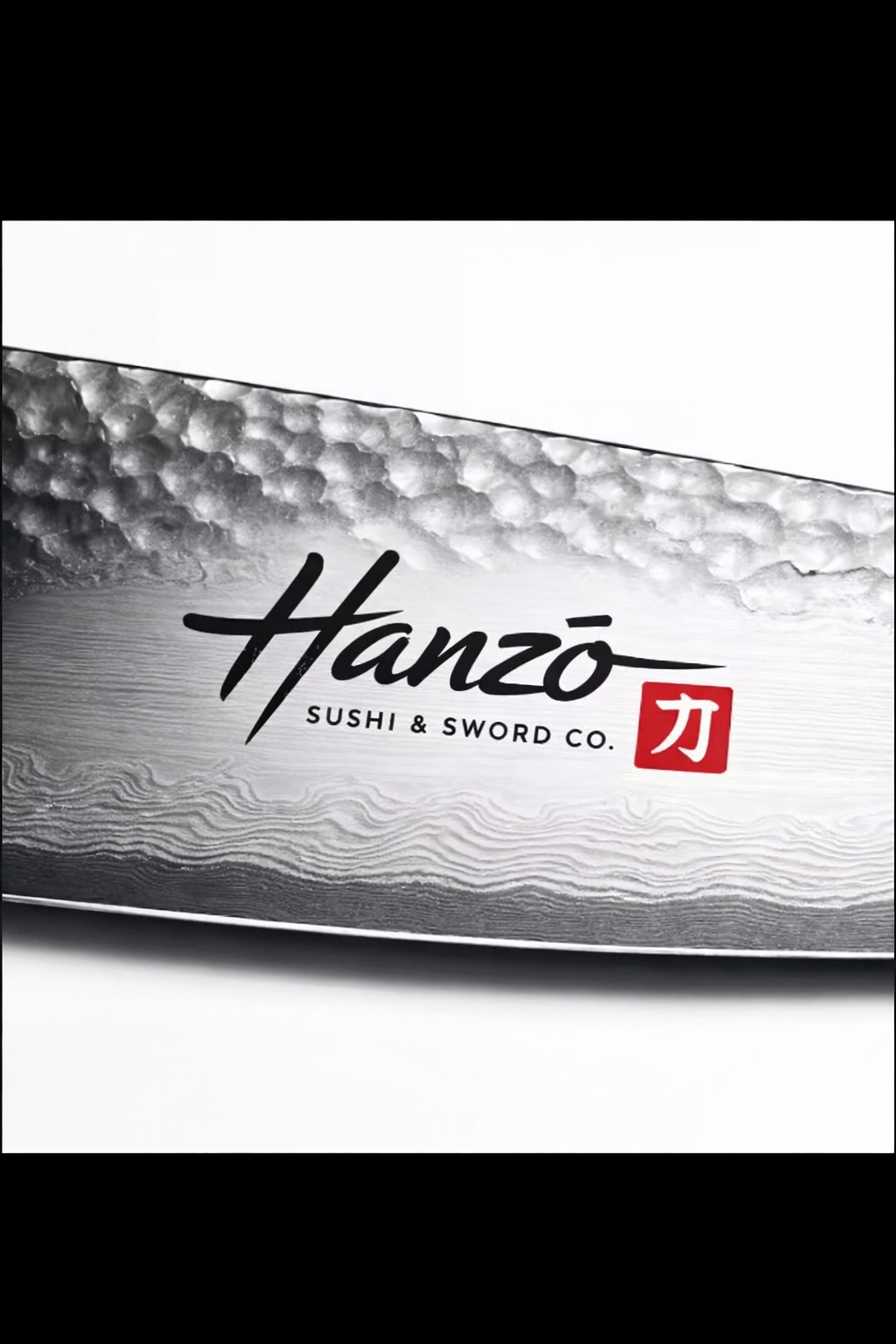
The visible layer line near a laminated blade's edge is not decoration. It is the boundary between hard and soft steel. Your hamon. The same engineering logic behind every serious laminated kitchen knife today.

We are not traditional katana smiths. We have chosen our blades with the same philosophy. Hard where they need to be hard. Supported where they need to give. A happy medium between the general purpose knife and the ultra-expensive, ultra-delicate high-carbon Japanese knives that demand as much from the cook as they give. Built to work in a real kitchen, every day, in the hands of someone who knows how to use them.

The samurai's soul was his katana.
In the kitchen, the chef's blade is no different.

Selected by professionals for

The feel of the knife in the hand. The balance. The way the edge enters food. The materials and the finish. These are the things a working chef notices immediately. These are the things we looked for.

Know Your Edge

A rolled edge and a chipped edge are not the same thing, and neither means you have a bad knife. A rolled edge is the result of soft contact over time. The edge has folded, not failed. A honing rod fixes it in seconds. A chipped edge is a different story. That is impact. Bone, a frozen product, a ceramic board, or a technique that asked the blade to do something it was not designed for.

In Goju-ryu, the principle is simple. Hard on soft, soft on hard. Applied to knives it means this. A hard high-carbon blade belongs on soft materials. Meat, fish, vegetables. That is where a fine edge performs. Against hard materials, bone, frozen product, hard rind, you reach for a softer tougher steel. One that will flex and roll rather than chip. A Formula 1 car is not better than a bulldozer. Each excels at its job. Neither belongs on the other's track. Use the right knife for the right task. A kiritsuke is not a cleaver. A santoku is not a boning knife. Respect the tool and it will respect you.

Steel Guide

Know Your Steel.

More carbon means a harder steel, a finer edge, better retention, and more brittleness. Chromium creates stainless. Corrosion resistant, but slightly softer. No steel is superior in absolute terms. Each is appropriate to its domain. A Formula 1 car is not better than a bulldozer. It depends entirely on what you are doing.

Rockwell Hardness (HRC) measures that balance in a single number.

56 to 58 HRC

Tough and forgiving. The edge rolls before it chips. Easy to resharpen. Common in German and Western knives built for heavy daily use. The workhorse range.

59 to 61 HRC

The professional sweet spot. Hard enough to hold a fine edge through a full service, tough enough to survive real kitchen conditions. Most serious Japanese-style knives live here. Hanzō blades target this range.

62 HRC and above

Ultra-hard, ultra-fine, and unforgiving. These blades hold an extraordinary edge but will chip on bone or a hard board. The domain of specialist Japanese knives and the cooks who dedicate themselves to their care.

Steel Types

Steel naming varies by country. Chinese, Japanese, American, German, and Spanish manufacturers all use different designation systems for steels that may be nearly identical in composition. What matters is what's in the steel, not what it's called. The key elements are carbon for hardness, chromium for corrosion resistance, and alloying additions like molybdenum, vanadium, cobalt, and tungsten that fine-tune toughness, edge retention, and wear resistance. Rather than navigate competing naming conventions, we rely on one universal standard: Rockwell Hardness.

High-Chromium Stainless

Typically 13 to 17% chromium. Corrosion resistant, forgiving, and easy to maintain. Holds a working edge through daily use without demanding obsessive care. The practical choice for professional kitchens where knives are tools, not relics.

High-Carbon Stainless

Higher carbon content pushes into harder territory. Takes a finer edge and holds it longer. Slightly less forgiving than lower-carbon steels but rewards proper technique and care with noticeably better cutting performance.

Composite Steel — 10Cr15CoMoV

Three-layer laminated construction. A high-carbon cobalt steel core, with cobalt adding hardness and wear resistance beyond what carbon alone achieves, clad in stainless for protection and ease of care. Hard where it cuts. Tough where it needs to give. The San Mai principle, applied.

Powder Metallurgy Steel

The pinnacle of modern steel technology. Rather than being cast and rolled conventionally, the steel is atomised into powder and sintered under pressure. The result is an extraordinarily uniform carbide distribution throughout the blade. Finer, more consistent edge geometry at hardness levels conventional steel cannot reliably achieve. The closest thing to perfection a kitchen knife can hold.

Powder Damascus

Powder metallurgy steel pattern-welded into Damascus layers. The performance of powder steel with the visual character of Damascus. Each blade is unique. The rarest combination in the range.

Damascus / Pattern Welded

Multiple layers of steel forge welded together, twisted, and flattened. Think of a rope or chain being compressed flat. The pattern you see is the actual structure of the steel revealed by acid etching. It runs through the entire blade, visible on the spine, the flats, and the edge. Each blade is unique because the steel itself is unique. True pattern welded Damascus is not a finish. It is what the knife is made of. Be aware that some knives carry a laser etched or acid printed surface pattern designed to look like Damascus. Sand it and it disappears. That is paint on plastic. Real Damascus does not wear off.

手入れ

Knife Care

A Blade That
Lasts Generations.

Hand Wash Only

Rinse with warm water and mild soap immediately after use. Dry thoroughly before storing.

Store It Right

A magnetic strip is ideal. A knife block works too. Blade sideways or resting on its spine, never on the edge. Storing edge-down destroys the blade before you've even used it. Never loose in a drawer.

Choose Your Board

Wood and plastic both work. What destroys a blade is glass, ceramic, stone, or any hard non-porous surface. Never cut on a plate, a countertop, or a glass board. The edge will be gone before the meal is finished.

Hone Before Each Use

A few passes on a honing rod before cooking keeps the edge aligned and razor-sharp.

Sharpen with Restraint

When honing is no longer enough, a whetstone will restore the edge. A few light passes is all it takes. Every stroke removes steel. The more you grind, the further you move from that original razor-thin edge. Less is always more.

Oil Occasionally

A drop of food-grade mineral oil on the blade protects against moisture and keeps the steel bright.